
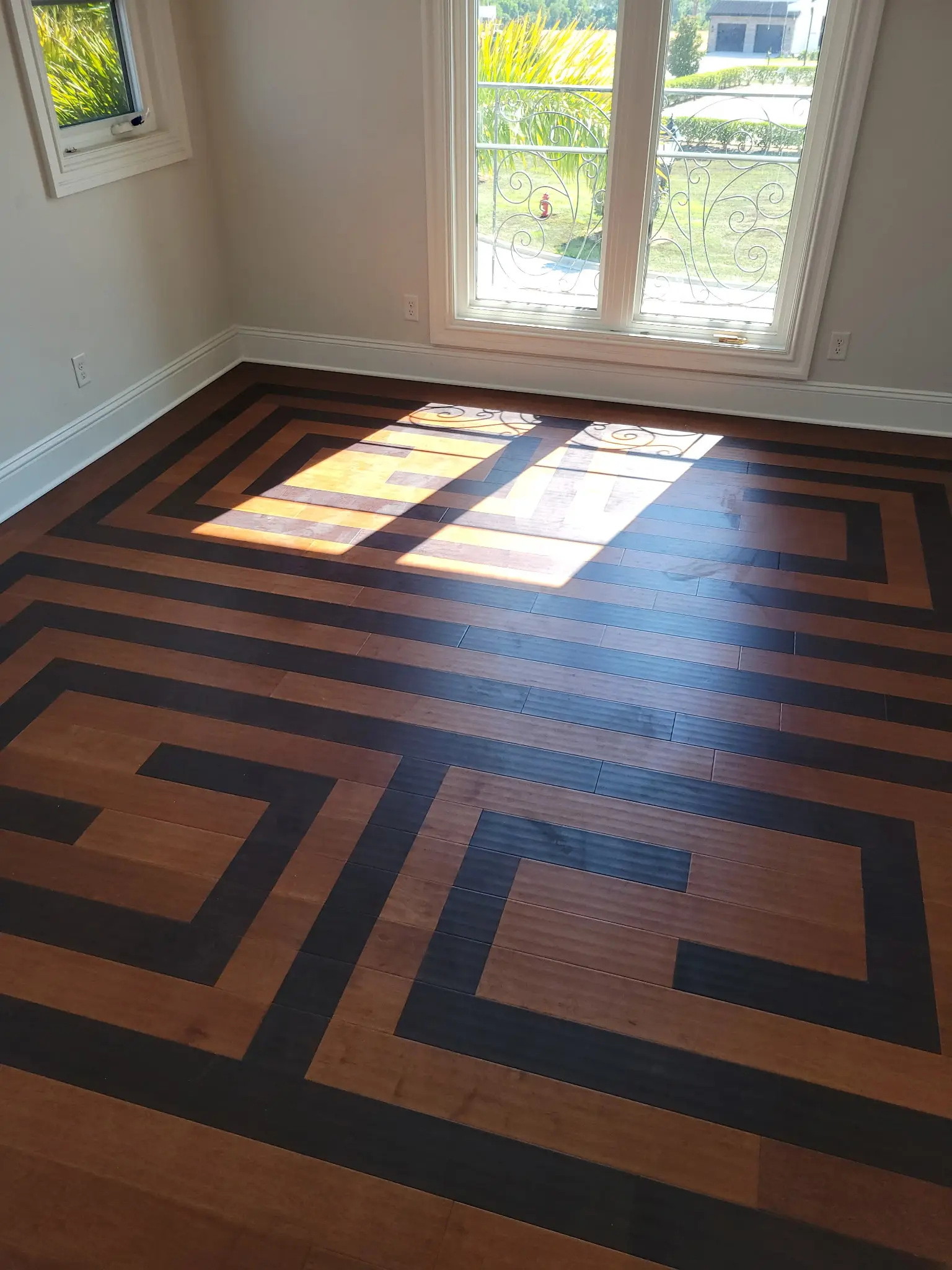
Corners that stay tight
Every turn in the pattern is a joint where two boards meet. On a floor like this, a gap at one corner would show across the whole room.
Custom Flooring
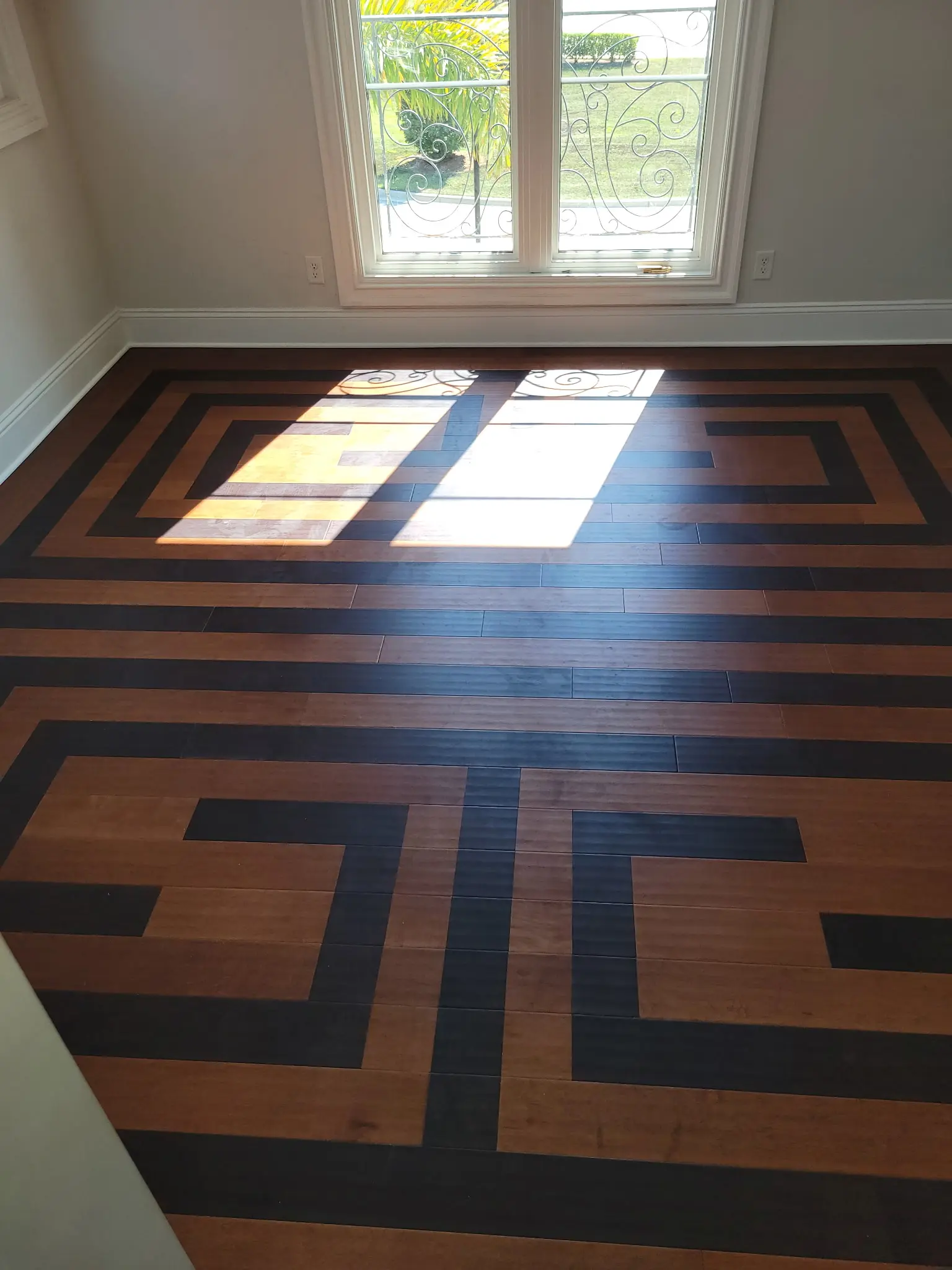
A two-tone wood floor laid in a Greek key pattern and sized to the room, so the design frames the space instead of fighting it.
At a glance
A patterned floor like this is planned before a single board goes down. The size of each loop, the width of the border, and where the pattern starts all depend on the room’s measurements, so the design lands evenly against every wall.
Two-tone layouts also leave nowhere to hide. Every cut and every corner is visible, and a small mistake early on carries across the whole floor.
Thinking about something similar? Custom patterns work best in rooms where the floor can be the feature: entryways, dining rooms, studies, and bedrooms. Mark can look at the space and talk through a scale and color combination that suits it.
Look closer
What to notice in this project, and why it matters for how the floor looks and lasts.
Every turn in the pattern is a joint where two boards meet. On a floor like this, a gap at one corner would show across the whole room.
The border runs parallel to the walls and the window, so the pattern looks planned for this room rather than dropped into it.
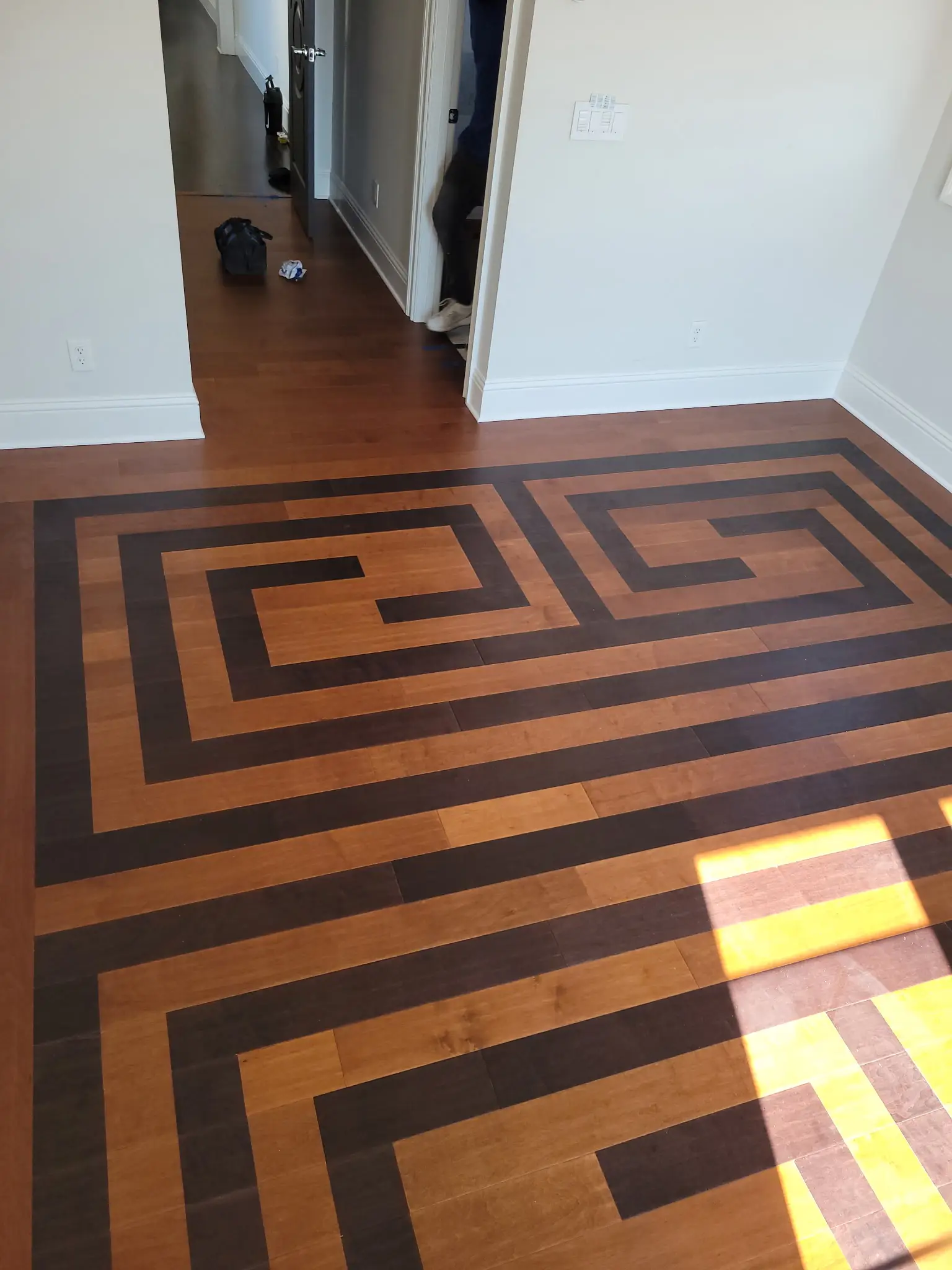
The pattern stops at the doorway and the hallway continues in a single tone, keeping the design to the room it was made for.
Gallery
More projects
 01
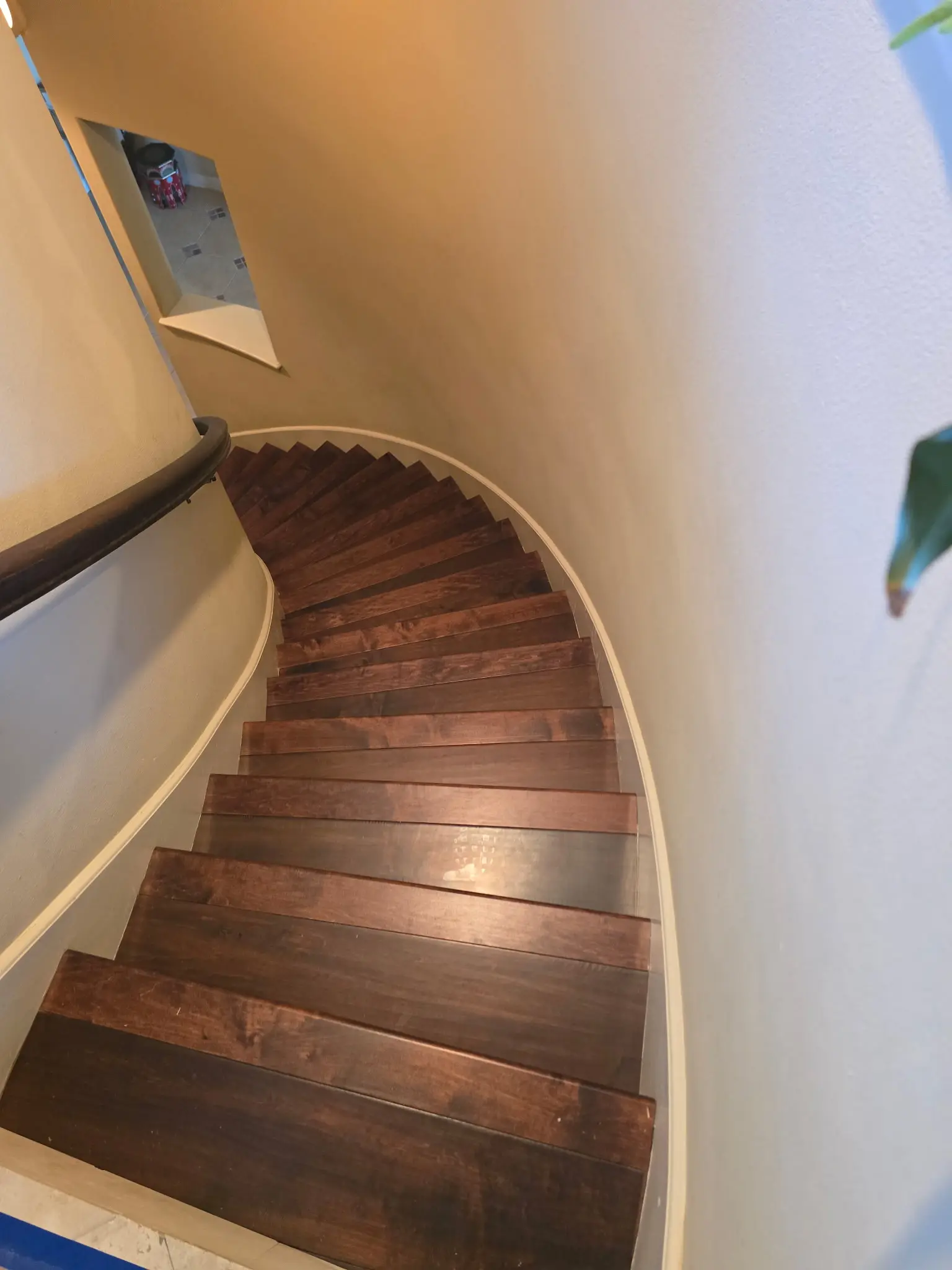
Custom Stair Work
Dark wood treads fitted to a tightly curved staircase, where every step tapers and changes angle as it follows the wall.
View project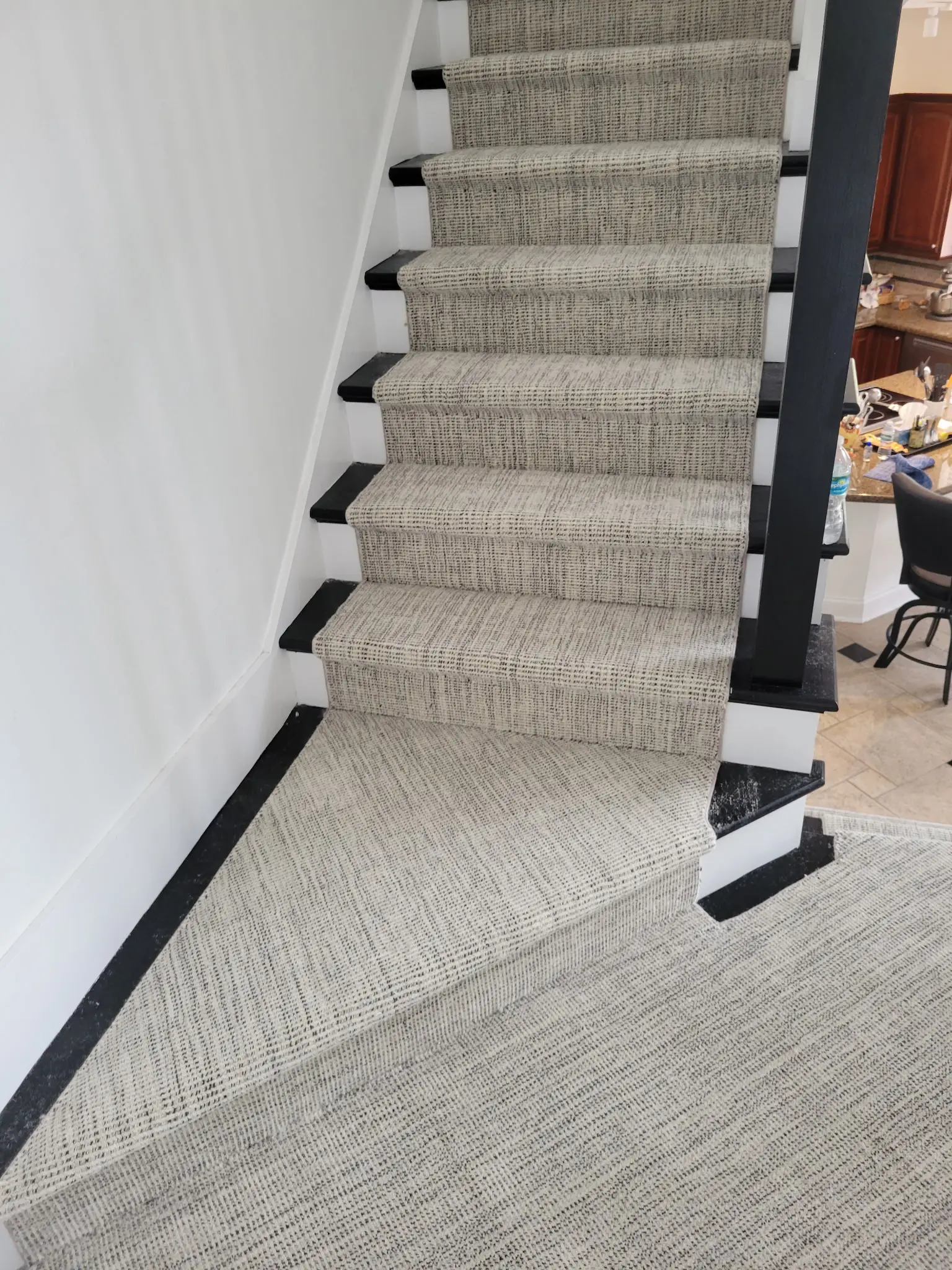 02
Carpet & Stair Runners
A woven stair runner fitted over dark wood treads and carried through a turning landing, with an even wood border on every step.
View project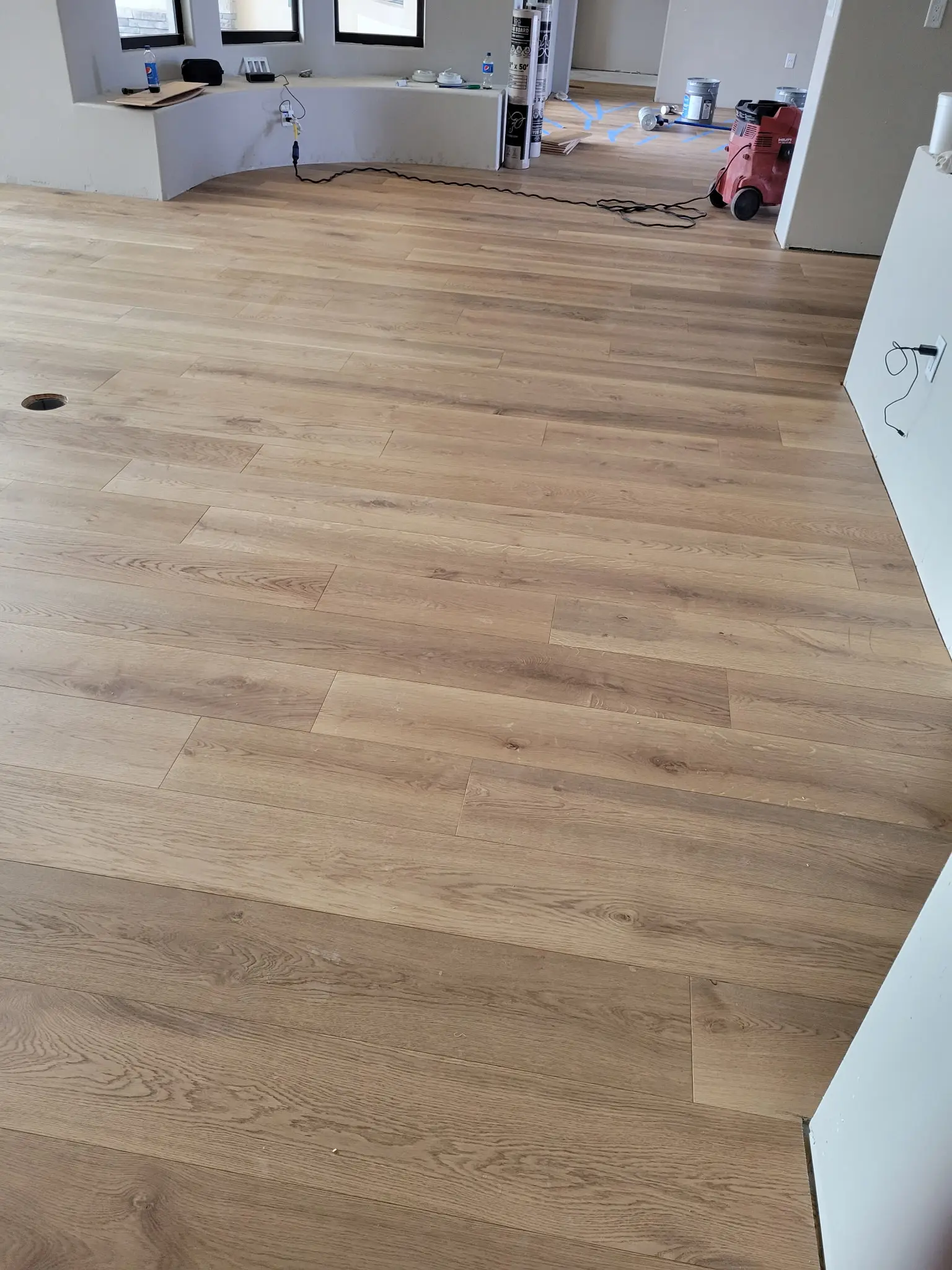 03
Flooring Installation
Long, wide planks laid through an open living area during construction, with a wood border framing a decorative mosaic tile inset.
View projectStart with an honest look at the job
Call, text, or request an on-site estimate. Mark will look at the space, the material, and what the work actually requires before recommending a direction.